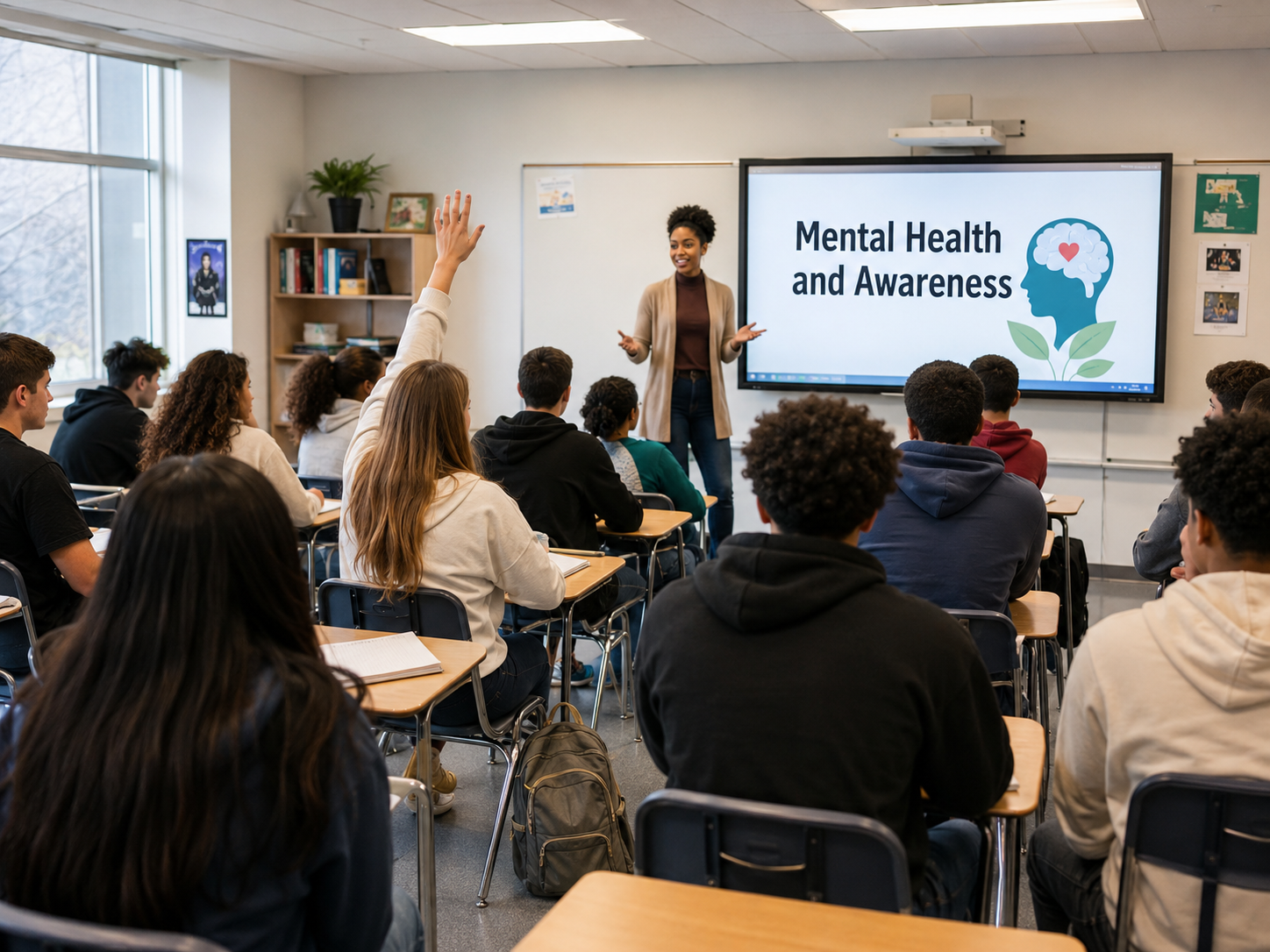
Why Mental Health Education Should Start in Schools
Mental health education should not begin after a crisis occurs. It should begin early, consistently, and intentionally within schools. Children spend a significant portion of their lives in educational environments, yet many schools still provide little structured education about emotional wellness, stress management, communication, or mental health awareness.
Students are expected to learn mathematics, science, reading, and history, but many never learn how to process anxiety, disappointment, grief, peer pressure, emotional conflict, or self-esteem issues. As a result, countless young people enter adulthood without understanding how to manage their emotional health effectively.
Mental health challenges among children and teenagers continue rising across the country. Anxiety, depression, stress, social isolation, bullying, and emotional exhaustion affect students at increasingly younger ages. Social media has intensified many of these pressures because young people constantly compare themselves to unrealistic online standards.
Many students quietly struggle emotionally while still attending class daily. Some experience panic attacks, while others deal with overwhelming stress, emotional numbness, or feelings of hopelessness. Unfortunately, emotional distress often goes unnoticed because many students learn how to hide their struggles.
Mental health education can change this reality by helping students identify emotions, communicate effectively, manage stress, and seek support when needed. Emotional intelligence is just as important as academic intelligence because emotional wellness directly impacts concentration, behavior, relationships, and learning ability.
Schools that prioritize mental health education create healthier learning environments overall. Students who feel emotionally supported are often more engaged academically and socially. They also develop stronger communication skills, conflict resolution abilities, and self-awareness.
Teachers benefit from mental health education initiatives as well. Educators frequently encounter students dealing with emotional challenges, trauma, or behavioral issues, yet many teachers receive limited training in mental health awareness. Providing educators with proper resources and support helps them respond more effectively to student needs.
Bullying prevention is another major reason mental health education matters. Many students struggle with self-esteem, social pressure, and emotional insecurity. When schools teach empathy, emotional awareness, and respectful communication, students develop healthier relationships with peers.
Parents should also be included in mental health education conversations. Families play critical roles in shaping emotional environments for children. Open communication between schools and families helps reinforce healthy emotional habits at home and within communities.
One misconception is that discussing mental health with children somehow creates emotional weakness. In reality, mental health education strengthens resilience because it teaches children healthy coping strategies before severe problems develop. Emotional awareness gives young people tools for navigating life challenges more effectively.
Mental health education should include practical life skills such as stress management, emotional regulation, conflict resolution, mindfulness, healthy communication, and self-care strategies. Students should learn how emotions affect behavior, relationships, and decision-making.
Counseling services within schools also need stronger support and accessibility. Many students need safe spaces where they can speak openly about emotional struggles without fear of embarrassment or punishment. School counselors, psychologists, and support staff play important roles in early intervention.
Social media literacy should become part of mental health education as well. Students need help understanding how online comparison, cyberbullying, unrealistic beauty standards, and constant digital exposure can impact emotional wellness.
When schools normalize mental health conversations, students begin viewing emotional wellness as part of overall health instead of something shameful or hidden. This shift helps reduce stigma and encourages young people to seek help earlier.
The future of mental health awareness depends heavily on education. Schools have opportunities to shape emotionally healthy generations by teaching students how to care for their minds as intentionally as they care for their academic performance.
Mental health education is not an extra subject that can be ignored. It is life preparation. When students understand emotional wellness, they become better equipped to handle relationships, careers, stress, leadership, and personal growth throughout adulthood.
